Concerto in Mi Maggiore “La Primavera” 1 Allegro 3’47” 2 Largo 2’21” 3 Allegro 4’27”
Concerto in sol minore “L’Estate” 4 Allegro non molto Allegro 5’24” 5 Adagio 2’17” 6 Presto 2’48”
Concerto in Fa Maggiore “L’Autunno” 7 Allegro 5’39” 8 Adagio molto 2’26” 9 Allegro 3’39”
Concerto in Fa minore “L’Inverno” 10 Allegro non molto 3’21” 11 Largo 2’19” 12 Allegro 3’20” Basso Continuo: Cecilia Radic violoncello - Laura Manzini cembalo
Concerto in re min. per due violini, archi e continuo F I n° 100 13 Allegro non molto 4’25” 14 Adagio 4’16” 15 Allegro molto 3’07” solisti: Salvatore Accardo - Laura Gorna
Concerto in Si bem. Magg. per violino, violoncello, archi e continuo F IV n° 2 16 Allegro moderato 4’32” 17 Andante 2’07” 18 Allegro molto 3’25”
solisti: Salvatore Accardo - Cecilia Radic
Conceived, recorded and produced by Giulio Cesare Ricci Recording assistant Paola Liberato Recording date May 30-31/2009 valve microphones: Neumann U47, U48, M49 mike pre-amplifiers: Signoricci line, digital, microphone, supply cables: Signoricci Photo Andrea Piccioni Among the many violin pages that Giulio Cesare Ricci has recorded with Salvatore Accardo in all these years, the edition of Antonio Vivaldi's Le Quattro Stagioni could not be missed. The great Maestro has taken up the original manuscript of Le Quattro Stagionigiving an interpretation of absolute reference. As for the location choice, Giulio Cesare Ricci has made an exception, not a historical place but the Auditorium that the architect Renzo Piano has obtained from the old Polenghi Lombardo factory in Lodi. Even if it is a contemporary Auditorium, the acoustics are very natural thanks to the wooden structures used for the recovery of this room. Recorded in Stereo DSD on Pyramix using dCS A/D and D/A converters The recording was made without sound manipulation, nor equalization, nor reverb, nor compression and expansion... but natural sound with true timbre.
The Concertos of the Seasons are among the most original and extraordinary creations of Antonio Vivaldi. Today's audiences know this, but the contemporaries of the "Red Priest" immediately understood it. The originality is all the more surprising since the Concertos essentially follow the usual model: division into three movements Fast-Slow-Fast and alternations "tutti"-"solo" on the path opened by Giuseppe Torelli.
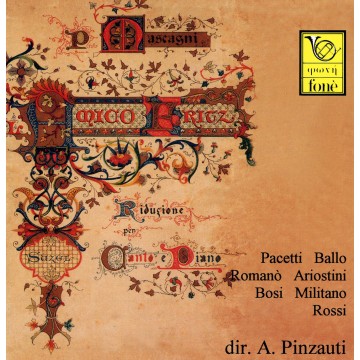
Lyrical comedy in three acts by P. Suardon Music by Pietro Mascagni Edizioni Casa Musicale Sonzogno by Piero Ostali, Milan
Characters and performers: Suzel SANDRA PACETTI Fritz Kobus PIETRO BALLO Beppe PAOLA ROMANO' David ARMANDO ARIOSTINI Federico CARLO BOSI Hanezò FILIPPO MILITANO Caterina ALESSANDRA ROSSI Conductor ALESSANDRO PINZAUTI ORCHESTRA TUSCAN INSTRUMENTAL ACADEMY COOPERATIVA ARTISTI ASSOCIATI CHOIR directed by STEFANO VISCONTI
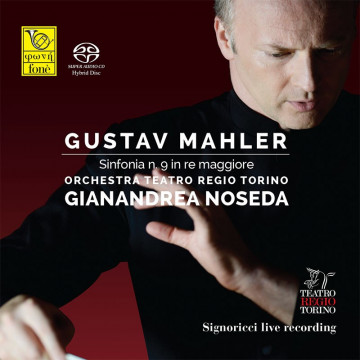
GUSTAV MAHLER Sinfonia n. 9 in re maggiore (1909-1911) ORCHESTRA TEATRO REGIO TORINO GIANANDREA NOSEDA Concerto realizzato nell’ambito del Progetto Mahler
Hi-Resolution Audio
forum Would you like more information?
Salvatore Accardo - Antonio Vivaldi, Le quattro...
[Hi-Res Audio] Salvatore Accardo - Antonio Vivaldi, Le quattro Stagioni
Salvatore Accardo - direttore e...
sentiment_very_satisfied Send to a friend
Salvatore Accardo - Antonio Vivaldi, Le quattro...
[Hi-Res Audio] Salvatore Accardo - Antonio Vivaldi, Le quattro Stagioni
Salvatore Accardo - direttore e...


 Native Dsd
 Qobuz
Qobuz
 Hd Tracks
 High Res Audio
 iTunes
 Amazon
 Tidal
Tidal
 Deezer
 Spotify